
“Carrots improve your eyesight”: the story of a phrase born in 1940
It is probably the most repeated sentence in the history of ophthalmology, and one of the most misunderstood. It has survived eighty years, three generations and just about every family dinner table in Europe. It was born in the winter of 1940, in very particular circumstances, and it contains, as so often, a grain of truth buried under a mountain of exaggeration. Here is what research actually says, and why the nuance matters more than you might think.
THE ORIGIN
Winter 1940: what the Royal Air Force had to hide
In the autumn of 1940, the night raids over England left Britain’s defenders with a problem that was simple to state and hard to solve: how do you intercept, in pitch darkness, an aircraft you cannot see. The British answer lay in a still experimental piece of onboard equipment, airborne interception radar, which allowed a night fighter to track its target without ever seeing it. It was a military secret of the highest order.
Yet the success of certain night fighter pilots very quickly became conspicuous in public. One of them, John Cunningham, piled up night interceptions and earned himself the press nickname “Cat’s Eyes”. Official communications offered a convenient explanation: exceptional eyesight, kept sharp by eating a great many carrots. The explanation had the merit of being verifiable by nobody, and of being charming.
Here we should be honest about what is known and what is assumed. That the Royal Air Force kept the legend alive to draw attention away from radar is the version most often told, and it is plausible. But historians who have worked on the archives make two points. First, German intelligence was itself developing radar systems: it is unlikely that they were fooled for long by a story about vegetables. Second, and more importantly, the British Ministry of Food had reasons of its own for promoting the carrot.
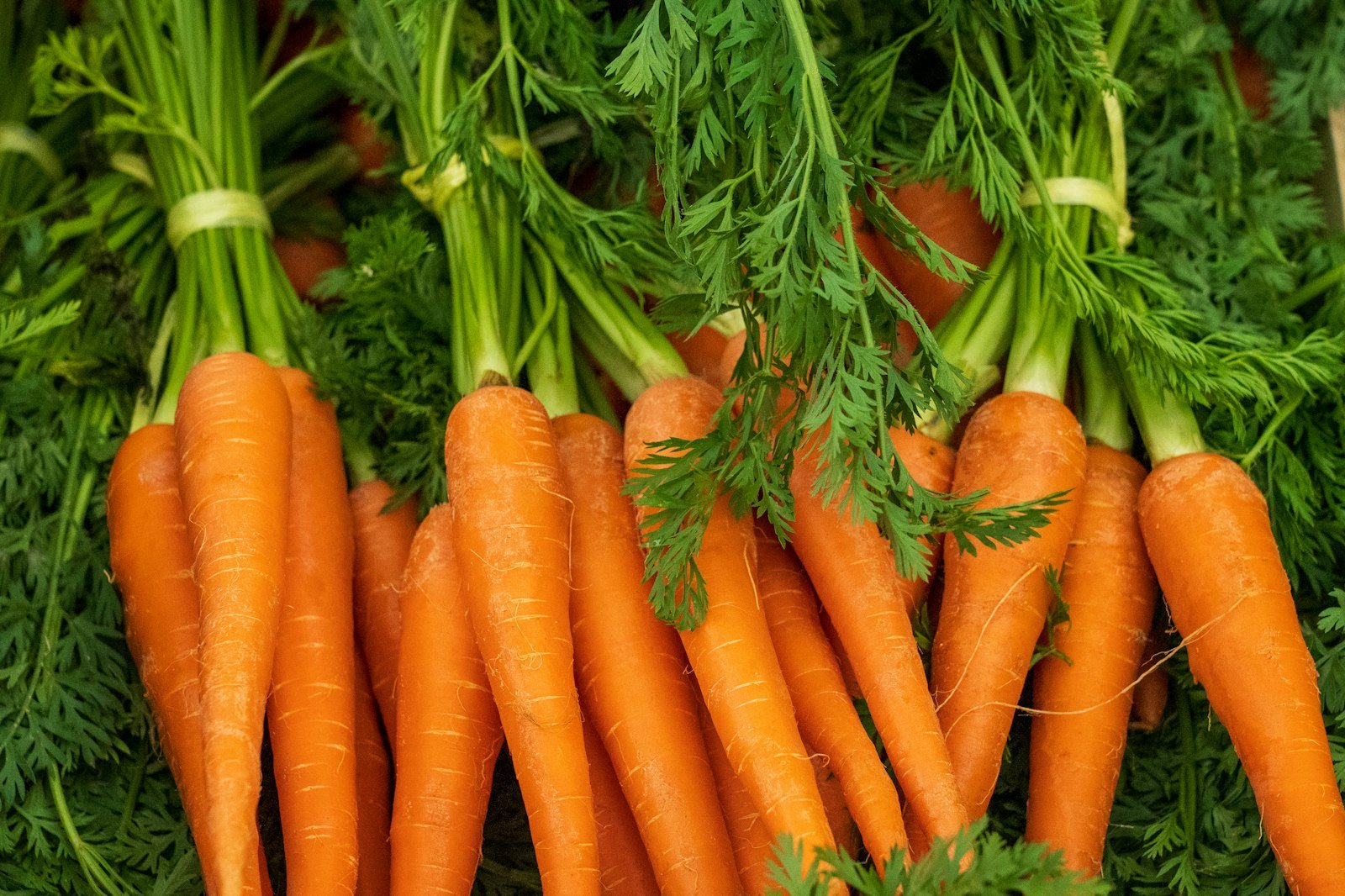
Those reasons were down to earth. Carrots were not rationed, they grew abundantly in British soil, and the country was producing a considerable surplus at a time when sugar, butter and imported fruit were scarce. A large-scale campaign was launched to encourage people to eat more of them, complete with a cartoon character, substitute recipes, and one unanswerable argument in the middle of the blackout: carrots will help you find your way through unlit streets. The message aimed at home and the message aimed abroad reinforced one another.
Eighty years on, the radar has been declassified, rationing is a memory, and the phrase is still with us. It is probably the most enduring piece of public health messaging ever achieved, and nobody designed it as such.
THE GRAIN OF TRUTH
Why vitamin A really is essential to night vision
This myth has lasted so long because it rests on a thoroughly established piece of biochemistry. To understand it, we need to go down to the level of the retina, and more precisely to its two families of photoreceptors.
Rods, rhodopsin and retinal
Cones handle detail and colour vision in daylight. Rods are the sensors of dim light: far more numerous, far more sensitive, and unable to distinguish colours. Their pigment is called rhodopsin. And rhodopsin is made of a protein, opsin, bound to a molecule derived directly from vitamin A: retinal.
When a photon strikes rhodopsin, retinal changes shape, the signalling cascade begins, and the information travels to the brain. The pigment must then be regenerated before it becomes sensitive again. This cycle consumes retinal continuously. Without a sufficient supply of vitamin A, the body can no longer rebuild the stock: the rods are left with opsin and no chromophore, a lock without a key. A landmark review published in 2025 in Progress in Retinal and Eye Research sets out this mechanism in detail, along with the role of photoproducts in the loss of sensitivity.

What deficiency looks like in humans
A study published in Experimental Eye Research followed three patients who had become vitamin A deficient for digestive reasons, two with primary biliary cholangitis and one with Crohn’s disease, all of whom came in complaining of poor vision at night. The measurements speak for themselves: at baseline, no rod function was measurable at all and cone adaptation was delayed. After oral vitamin A supplementation, visual function returned to normal within eight days in all three. The authors were also able to follow the onset of deficiency in one of them: rod adaptation first slows, then disappears, while the cones stay normal for a long time.
That is the grain of truth, and it is a substantial one. In someone who lacks vitamin A, providing it restores night vision, and it does so within days. The 1940 phrase is not absurd: it is simply being stated outside the range in which it holds.
WHERE IT TURNS SERIOUS
Vitamin A deficiency is not a historical curiosity
In countries with a varied diet, true deficiency is rare and arises mainly in settings of malabsorption: inflammatory bowel disease, liver or biliary disorders, bariatric surgery, chronic alcohol use, pancreatitis. In these patients, difficulty seeing at night is worth taking seriously.
Elsewhere in the world, the scale is entirely different. Vitamin A deficiency remains one of the leading preventable causes of childhood blindness, and it produces a clinical picture with a name of its own: xerophthalmia. Its progression has been described for a long time and follows a fairly constant order.
- Night blindness (nyctalopia): reduced vision in low light. It is the first sign, and it is reversible.
- Drying of the conjunctiva, followed by Bitot’s spots, the characteristic foamy whitish deposits on the surface of the eye.
- Drying of the cornea, which loses its transparency.
- Keratomalacia: melting of the cornea, the stage at which visual loss becomes permanent. In a young child it can set in within a few days.
This contrast is what makes the subject interesting. Depending on the context, the same molecule is either an emergency treatment that saves a child’s sight or a perfectly useless supplement for an adult who eats normally. That is not a contradiction: it is the general rule with nutrients, and the carrot myth is simply what happens when we forget it.
WHERE IT IS FALSE
Beyond deficiency: nothing more, and sometimes something less
The intuition behind the myth’s success is the intuition of the fuel tank: if a little is necessary, more ought to be better. Vision would work like an engine you could over-fuel. That reasoning is wrong for almost every vitamin, and it has been put to the test, on a large scale, with results that surprised the investigators themselves.
The Finnish trial that overturned an obvious truth
In the early 1990s the epidemiological observation was consistent: people whose diet is rich in carotenoid-rich fruit and vegetables develop fewer lung cancers. The ATBC trial, published in the New England Journal of Medicine in 1994, set out to turn that correlation into proof. It randomised 29,133 male smokers aged 50 to 69 from south-western Finland to beta-carotene 20 mg a day, alpha-tocopherol 50 mg a day, both, or placebo, with five to eight years of follow-up.
The result became a landmark. Among the 876 new lung cancers diagnosed during the trial, beta-carotene not only reduced nothing, but the incidence was 18% higher in the supplemented group, with a 95% confidence interval running from 3% to 36%. Total mortality was also 8% higher. A meta-analysis of randomised trials published in 2023 in Nutrition Reviews confirms the broader conclusion: beta-carotene supplementation brings no benefit on cancer incidence and may be harmful to the lung, particularly in smokers.
This difference between the food and the tablet is one of the most robust lessons of modern nutrition. The carrot is not the problem. What is, is the idea that you can extract one molecule from it, concentrate it, and expect the same effect.
And for the eyes? What AREDS2 found
The AREDS2 study, published in JAMA in 2013, enrolled 4,203 participants aged 50 to 85 at risk of progressing to an advanced form of age-related macular degeneration. Among other things, it tested the addition of lutein and zeaxanthin, two carotenoids found in the macula, to the existing antioxidant formula. After five years, the probability of progressing to an advanced form was 31% on placebo and 29% on lutein-zeaxanthin, a hazard ratio of 0.90 that was not statistically significant: the 98.7% confidence interval ran from 0.76 to 1.07, with a p value of 0.12. Omega-3 fatty acids brought no benefit either.
One figure from the same trial deserves to be better known: there were 23 lung cancers (2.0%) in the group receiving beta-carotene against 11 (0.9%) in the group without it, mostly among former smokers. That is precisely why beta-carotene was removed from the recommended formulations and replaced by lutein.
We should nonetheless resist over-enthusiastic debunking, because the literature is not uniformly negative. A 2023 Cochrane review concludes, with what it rates as moderate-certainty evidence, that AREDS-type antioxidant supplementation probably slows progression to late AMD, and that people with intermediate AMD are the most likely to benefit, because their risk of progression is the highest. In other words, there is one precise clinical situation, identified by examining the back of the eye, in which supplementation makes sense. It concerns neither healthy eyes, nor night vision, nor short-sightedness, nor visual acuity in general.
IN PRACTICE
What your plate can do, and what it will never do
Let us start with the limit, because it is a clear one. No food alters the length of the eye, the curvature of the cornea or the power of the lens. In other words, no diet corrects short-sightedness, long-sightedness or astigmatism. These errors are geometrical; they are corrected optically or surgically. No study has shown that any particular diet alters a refractive error.
What diet does influence are the conditions linked to ageing of the retinal tissue and of the lens, through effects that are slow, statistical and small at the individual level. The available data converge on a recommendation that is anything but spectacular: a varied diet, rich in leafy green vegetables, colourful fruit and oily fish, combined with protection from ultraviolet radiation and stopping smoking. This subject is developed in detail in our feature on diet and cataract prevention, which applies the same principles to the lens.
Two practical remarks, often useful in consultation. The first: lutein and zeaxanthin, the two carotenoids genuinely concentrated in the macula, come chiefly not from carrots but from dark green vegetables, spinach, kale, broccoli, and from egg yolk. Carrots mainly supply beta-carotene, the precursor of vitamin A, whose usefulness stops once requirements are met. The second: those requirements are modest, and the body stores vitamin A in the liver. An ordinary diet covers them without effort.
THE REAL ISSUE
Seeing less well at night: the causes worth looking for
This is the reason for consulting that the carrot myth delays most often. Someone notices that they drive less willingly in the evening, that oncoming headlights dazzle them more, that road signs become readable later than they used to. They eat carrots for six months. Then they come in. And the cause almost always lies elsewhere.
- An early cataract. This is the first hypothesis after the age of fifty. The clouding lens scatters light instead of focusing it: the difficulty appears first at night, facing headlights, well before visual acuity measured in daylight starts to fall. The warning signs are set out in our page on the symptoms of cataract.
- An uncorrected or under-corrected refractive error. The pupil dilates in the dark, which accentuates optical aberrations and produces what is known as night myopia. An unsuitable correction becomes noticeable at night before it does in daylight.
- A retinal disorder. Some inherited dystrophies, including retinitis pigmentosa, begin with progressive night-time difficulty in young adults. It is rare, but it is not something diet can make up for, and an early diagnosis changes the follow-up.
- Halos after refractive surgery or after lens implantation. The subject is common and well documented; we have devoted a separate article to halos and glare at night.
- A true deficiency, lastly, to be considered in the presence of chronic digestive disease, a history of obesity surgery or liver disease.
What these five causes have in common is that none of them can be diagnosed without an examination. Acuity measurement, refraction, slit-lamp examination of the lens, dilated fundus examination: the consultation takes around thirty minutes and settles the question. Putting off that examination in favour of a dietary hypothesis costs time, and sometimes more than time.
TAKE-HOME MESSAGE
What to remember
The carrot myth is not a lie, it is a truth taken out of place. It is true that without vitamin A night vision fades; it is true that giving it to someone who lacks it restores that vision, and quickly. It is false to conclude that more would give more, and the story of beta-carotene supplementation shows that this error of reasoning is not merely ineffective.
One thing remains that 1940 achieved and that medicine achieves rather less well: making a health message memorable. Eighty years of unbroken transmission, with no budget, no campaign, no reminders. If the same could be managed with “have your eyes checked when you start driving less well at night”, a good many cataracts would be picked up earlier. Perhaps that will be the subject of the next myth.
FREQUENTLY ASKED QUESTIONS
Frequently asked questions
Do carrots really improve your eyesight?
They protect it when it is threatened by vitamin A deficiency, but they do not make vision that is already normal any better. The distinction is essential: vitamin A is the precursor of the pigment in the rods, the photoreceptors of night vision. Once requirements are met, taking in more improves neither visual acuity, nor colour vision, nor night vision. Nor does any food correct short-sightedness, long-sightedness or astigmatism, which are matters of the geometry of the eye.
Where does the carrots and night vision myth come from?
It goes back to the winter of 1940 in Britain. The success of Royal Air Force night fighters rested on airborne interception radar, then classified, and official communications put forward an alternative explanation: the exceptional eyesight of certain pilots, maintained by eating carrots. At the same time, the Ministry of Food was campaigning to use up a national surplus of carrots, an unrationed vegetable, on the argument that they would help people get about during the blackout. Historians consider that this second, domestic and nutritional motive played at least as large a part as any wish to mislead the enemy.
What happens in vitamin A deficiency?
The first sign is night blindness, that is, reduced vision in low light, caused by the inability to regenerate rhodopsin. A study published in Experimental Eye Research in three patients who were deficient for digestive reasons found a complete absence of measurable rod function at baseline, with a return to normal within eight days of oral supplementation. If the deficiency persists, it progresses to xerophthalmia: dryness of the conjunctiva, Bitot’s spots, then corneal involvement that can go as far as keratomalacia, the stage at which visual loss becomes permanent. This deficiency remains a major cause of preventable childhood blindness worldwide.
Should I take dietary supplements for my eyes?
Not in the absence of a medical indication. In people who are not deficient, trials have found no visual benefit, and the ATBC trial in 29,133 smokers even found an 18% higher incidence of lung cancer with beta-carotene. There is, however, one situation in which the question is a serious one: a 2023 Cochrane review concludes, with moderate-certainty evidence, that antioxidant supplementation probably slows progression to late AMD, the benefit being clearest in intermediate AMD. That indication is established after examination of the back of the eye, and beta-carotene is now excluded from these formulations.
Can you eat too many carrots?
Eating very large quantities of carrots can turn the skin orange, especially on the palms, the soles and the sides of the nose: this is carotenoderma, harmless, reversible on stopping, and without any effect on the eyes. It differs from jaundice in that the white of the eye stays white. The real risk of overdose concerns preformed vitamin A, that is, the retinol found in supplements, in some animal livers and in cod liver oil, chronic excess of which is toxic. The body regulates the conversion of plant beta-carotene, which makes this mechanism protective where vegetables are concerned.
Which foods are genuinely useful for the eyes?
The two carotenoids concentrated in the macula are lutein and zeaxanthin, supplied mainly by dark leafy green vegetables such as spinach, kale and broccoli, and by egg yolk. Oily fish supply omega-3 fatty acids, and colourful fruit and vegetables a range of antioxidants. The expected effect is a population effect, slow and small at the individual level: the aim is to reduce a long-term risk, not to improve vision in the short term. Stopping smoking and protecting the eyes from ultraviolet radiation are at least as well documented.
I see less well at night: which causes should be looked for?
After the age of fifty, the first hypothesis is an early cataract, which often causes difficulty at night and facing headlights well before acuity measured in daylight starts to fall. Next come an uncorrected or under-corrected refractive error, accentuated by pupil dilation in the dark; halos after refractive surgery or lens implantation; more rarely, an inherited retinal dystrophy in a young adult; and lastly vitamin A deficiency, to be considered in cases of chronic digestive disease, liver disease or previous obesity surgery. None of these causes can be diagnosed without an examination including refraction, slit lamp and fundus examination.
Scientific sources
- The effect of vitamin E and beta carotene on the incidence of lung cancer and other cancers in male smokers (ATBC). N Engl J Med. 1994. PMID: 8127329
- Lutein + zeaxanthin and omega-3 fatty acids for age-related macular degeneration (AREDS2). JAMA. 2013. PMID: 23644932
- Antioxidant vitamin and mineral supplements for slowing the progression of age-related macular degeneration. Cochrane Database Syst Rev. 2023. PMID: 37702300
- Association between β-carotene supplementation and risk of cancer: a meta-analysis of randomized controlled trials. Nutr Rev. 2023. PMID: 36715090
- Visual function and rhodopsin levels in humans with vitamin A deficiency. Exp Eye Res. 1988. PMID: 3350064
- The physiology of dark adaptation: progress and future directions. Prog Retin Eye Res. 2025. PMID: 41015274
- Xerophthalmia. World Rev Nutr Diet. 2012. PMID: 23008038
- Epidemiology of vitamin A deficiency and xerophthalmia in at-risk populations. Trans R Soc Trop Med Hyg. 2012. PMID: 22326691
Further reading
- Diet and cataract: what the research actually shows
- Symptoms of cataract: when to see a specialist
- AMD: understanding, screening, monitoring
- Dr Moïse Tourabaly, Ophthalmologist
Cachan practice · Tel. +33 1 45 47 08 11
Medical disclaimer
This article is for information only. A personalised ophthalmological opinion remains essential for any treatment decision.
This article uses a historical episode as an educational starting point; the contextual elements relating to 1940 are reported as they stand in the published scholarship, with the uncertainties that go with them. The data cited come from studies whose average results say nothing about any individual situation. Nothing set out here amounts to personalised nutritional advice or to a prescription: any supplementation, particularly with vitamin A or beta-carotene, should be discussed with a doctor, especially in the case of current or past smoking, pregnancy or chronic illness. Any loss of vision, persistent difficulty at night or unusual glare calls for an eye examination.
Written and reviewed by Dr Moïse Tourabaly, ophthalmic refractive surgeon — former chef de clinique (Quinze-Vingts National Eye Hospital).
Last updated: September 5, 2026


