Solar retinopathy: what your eyes really risk during an eclipse
Solar retinopathy is a photochemical burn of the photoreceptors at the centre of the retina, caused by looking directly at the Sun without a suitable filter. It is rare, gives no sensation at the time, and shows itself only a few hours later as a dark patch in the middle of the visual field. Modern imaging has qualified the message that was repeated more than twenty-five years ago: visual acuity recovers in the vast majority of cases, but the injury to the photoreceptors usually leaves a permanent trace.
UNDERSTANDING
What is solar retinopathy?
The term refers to damage to the centre of the retina, the macula and more precisely the fovea, following direct exposure to sunlight. It is also called solar maculopathy, or eclipse retinopathy depending on the circumstances. It is a rare condition: in an Indian hospital network that saw more than three million new patients over eleven years, only 253 cases were recorded, that is 0.01% of the patients seen.
A photochemical burn, not a thermal one
The image that naturally comes to mind, a magnifying glass setting a leaf alight, is misleading. The dominant mechanism is not heating but a photochemical reaction: short wavelengths of the visible spectrum and near ultraviolet trigger, within the outer segments of the photoreceptors and the pigment epithelium, an oxidative cascade that disorganises these cells. The injury can therefore occur without any sensation of heat, and it concentrates exactly where the image of the Sun is formed: at the point of fixation, in other words at the centre of vision.
This location explains why the symptom is so disabling: a peripheral lesion often goes unnoticed, whereas a foveal lesion, however tiny, affects the area responsible for reading and recognising faces.
Why the retina gives no warning
The cornea is one of the most densely innervated tissues in the body: any insult to it triggers sharp pain immediately. The retina, by contrast, contains no nociceptive fibres; it transmits images, not sensations. Prolonged exposure to the Sun therefore produces no alarm signal at the time it occurs.
A second factor comes into play, and it is decisive during an eclipse watched late in the day. When the Sun is low and its surface largely hidden, the glare drops and looking becomes comfortable. That absence of discomfort is deceptive: the radiation reaching the retina remains more than enough to injure it, but the reflex of looking away, the one that protects us for the rest of the year, is no longer triggered.
ESSENTIAL RULE
Partial eclipse: the filter is never removed
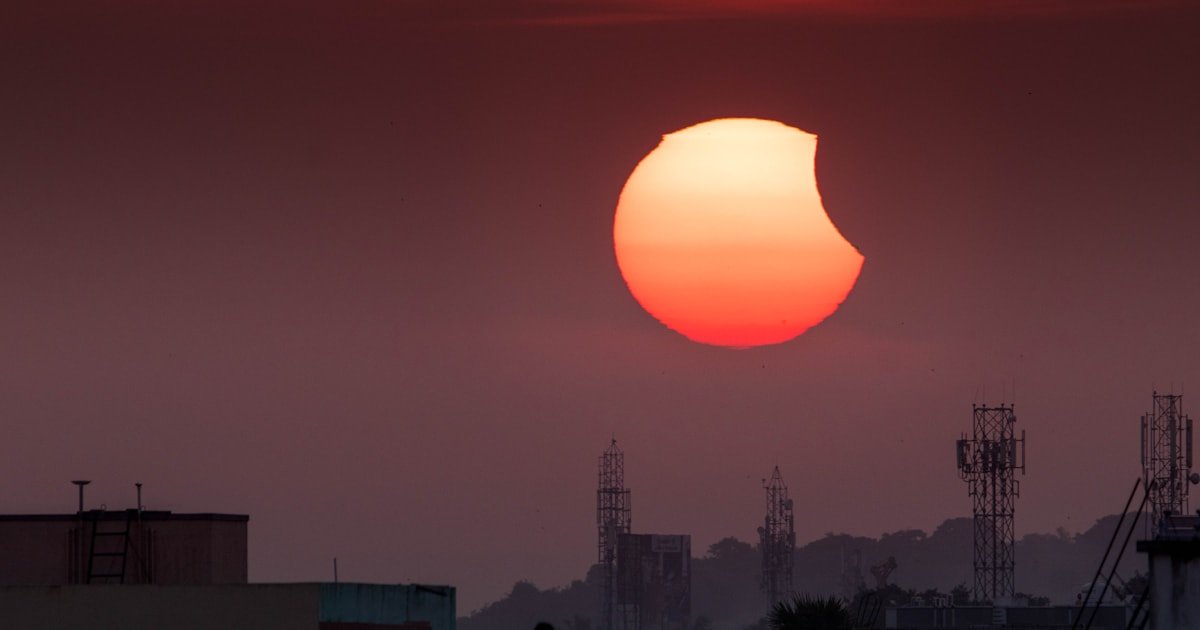
This is the most important point in this article, and the one most often misunderstood. An eclipse is total only within a narrow band; everywhere else, it is partial. On 12 August 2026, the path of totality crossed Greenland, Iceland and the Atlantic, then the northern half of Spain and the extreme north-east of Portugal, before ending over Majorca. According to CNES, it did not touch any point of French territory: from mainland France, Corsica included, the Sun was never completely covered. The same will be true on 2 August 2027: totality will cover the far south of Spain (Cádiz, Málaga), Gibraltar and North Africa, while in France the eclipse will be partial, in the late morning, with about half of the Sun covered in Paris and more in the south. On 26 January 2028, an annular eclipse will cross the south of Portugal and Spain; it too will be partial from France.
The consequence admits of no exception: from France, the filter must not be removed at any point. As long as a crescent of photosphere remains visible, however thin, it is enough to injure the retina. An annular eclipse is never total: a ring of Sun remains visible from start to finish, and the filter stays on throughout, including at the centre of the path of annularity. The rule is different only for an observer inside the path of totality of a total eclipse: during the few moments when the solar disc is completely covered, viewing with the naked eye becomes possible, but it requires putting the filter back on the instant the Sun reappears — a delicate manoeuvre, which assumes precise knowledge of the local times at which totality begins and ends.
Times and obscuration change from one eclipse to another and from one town to another. On 12 August 2026, the event took place in the evening, with the Sun very low — the most deceptive configuration, since the glare diminishes; on 2 August 2027, it will take place in the late morning. On 12 August 2026, obscuration ranged from 89.7% near the German border to 99.7% near the Spanish border. For the exact times where you live during a future eclipse, consult the ÉclipSEOP tool from the Paris Observatory (IMCCE), which computes local circumstances. Medically, that precision matters little: at 50% as at 99.7% obscuration, the advice is exactly the same.
DATA
Does an eclipse really cause a wave of eye injuries?
The honest answer is: less than people think. Recent data are frankly reassuring, and they deserve to be presented as they are, because a purely alarmist message ends up losing credibility.
An American cohort study published in 2026, covering a network of more than one million patients, recorded 555 cases of solar retinopathy between 2012 and 2024, an average of 44.5 cases a year. The difference between eclipse years (51.5 cases) and non-eclipse years (37.3 cases) does not reach statistical significance, and no correlation emerges with geographical exposure to the path of totality. In the same vein, analysis of ophthalmic emergency department visits in the United States around the April 2024 eclipse shows no significant increase: 853 visits before, 921 after.
These results must nonetheless be set against the only exhaustive national surveillance ever carried out in Europe, conducted in France by the Institut de veille sanitaire after the eclipse of 11 August 1999. A standardised questionnaire was sent to the 5,600 ophthalmologists practising in France and to 500 emergency departments. The findings, out of 1,024 notified consultations: 147 patients with a retinal lesion, including 17 severe cases with visual acuity below 2/10, and 7 bilateral cases. A further 106 cases of keratitis were reported.
How can these 147 cases be reconciled with the absence of any measurable excess in the United States today? The explanation is probably methodological: the French surveillance relied on active, exhaustive collection set up for the event, whereas the American data come from medical record coding, which captures mild cases seen in private practice poorly. The two approaches are not measuring the same thing. Concluding that the event is rare but real remains the fairest position.
A more recent French precedent points in the same reassuring direction. The eclipse of 1 September 2016 was annular over Réunion, where a ring of Sun remained visible all around the Moon, and only partial over Mayotte: in neither of these two French territories was the solar disc ever completely covered.
The surveillance set up by the regional unit of Santé publique France detected only one single consultation for an eye complication possibly linked to watching it, even though the event had generated considerable public enthusiasm. The Direction générale de la santé reads this as a sign that the protection advice had been properly followed. That, in the end, is the message of this article: the risk is real, and it can be prevented.
PROFILES
Two very different populations
One fact stands out when the published series are compared, and it is rarely highlighted: solar retinopathy linked to an eclipse and the form seen the rest of the time do not affect the same people.
After an eclipse, patients are young. Mean age was 30 years in the German series following the partial eclipse of 20 March 2015, 21.7 years in the Irish series and 16.5 years in the Egyptian series; the French survey of 1999 noted that 44% of patients were aged between 15 and 29. Curiosity, group dynamics and underestimation of the risk all combine.
Outside eclipses, the profile is reversed. In the American 2012-2024 cohort, median age at diagnosis is 54.1 years and 59% of patients are men. Psychiatric comorbidities are common there, with anxiety disorders in 32% of patients, major depressive episodes in 24% and psychotic disorders in 10%, and the exposure is then usually repeated and deliberate rather than a one-off accident.
The practical consequence is clear: around an eclipse, prevention messages should target adolescents, young adults and the people supervising them first.
PROGNOSIS
What OCT has changed about the prognosis
The large surveys of 1999 concluded that the damage was “probably temporary”. They were right about visual acuity. But they were carried out before high-resolution optical coherence tomography came into general use, which today makes it possible to visualise the layers of the retina individually. The picture that emerges is more nuanced.
Visual acuity recovers
On this point the series agree. After the partial eclipse of 2015, mean acuity improved from 0.65 at presentation to 0.97 at follow-up. In the Egyptian series, every affected eye improved, with progress beginning as early as the first week. The Irish series, which has the longest follow-up, up to eleven years, found a median gain of twelve letters over a mean follow-up of 5.7 years.
The anatomical lesion, however, often persists
This is what modern imaging has added. In the acute phase, OCT shows disorganisation of the outer layers at the centre of the fovea. That disorganisation partly resolves, but a small defect of the ellipsoid zone, the line corresponding to the inner and outer segments of the photoreceptors, remains visible over the long term. In the Egyptian series, this outer retinal defect persisted in 80% of patients at one year. A Swiss team puts it plainly: subtle alterations of the ellipsoid zone frequently persist, including in patients who have regained full visual acuity.
In other words, reading 10/10 on the chart does not mean the retina has returned to its previous state. Some patients retain a small central scotoma, perceived as a greyish patch or a localised blur, which the Irish authors describe as sometimes genuinely disabling for prolonged reading.
A limited recovery window, and no validated treatment
Recovery takes place in the weeks to six months following exposure, then reaches a plateau: beyond that, spontaneous improvement becomes unlikely. No treatment has been shown to be effective; corticosteroids have been used in several series without any demonstrated benefit, and their use remains debated. Management therefore consists of confirming the diagnosis, documenting the lesion and supporting the patient, which makes prevention all the more decisive.
SYMPTOMS
Warning signs, and when to seek advice
The gap between exposure and symptoms is the most disconcerting feature of this condition: there is nothing to feel at the time, and problems typically appear a few hours later, frequently on waking the next day. The features to know:
- A central or paracentral scotoma: a dark, greyish or blurred patch in the middle of the visual field. It stays exactly at the centre of whatever you look at, whereas a floater drifts and keeps moving once the eye has stopped.
- Reduced visual acuity, often moderate, sometimes asymmetrical between the two eyes.
- Metamorphopsia: straight lines appear wavy or distorted.
- Dyschromatopsia: altered colour perception in the affected area.
- Photophobia and sometimes associated headaches.
The damage is frequently asymmetrical, and often one-sided: in the Indian series, 62% of patients had only one eye affected. A patient may therefore notice nothing until they deliberately cover the healthy eye, a simple test anyone can do at home, covering each eye in turn to compare.
If any of these signs appear after looking at the Sun, an eye examination is warranted: measurement of visual acuity, fundus examination and above all macular OCT, which confirms the diagnosis by showing the damage to the outer layers and provides a baseline for follow-up. This assessment also rules out the other causes of a recent central patch, some of which have nothing to do with the Sun and require urgent care. In the absence of pain or sudden, profound visual loss, there is no need to rush to A&E during the night, but an appointment in the days that follow is reasonable.
OCULAR SURFACE
What about the cornea? The special case of photokeratitis
The retina is not the only structure at stake. Ultraviolet radiation also damages the corneal epithelium and causes photokeratitis, the same condition as a skier’s snow blindness or a welder’s arc eye. The picture is radically different: intense pain, a gritty sensation in the eyes, watering and marked photophobia, again appearing a few hours later. It is dramatic and very painful, but the corneal epithelium regenerates quickly and healing usually occurs within one to two days, with no lasting damage.
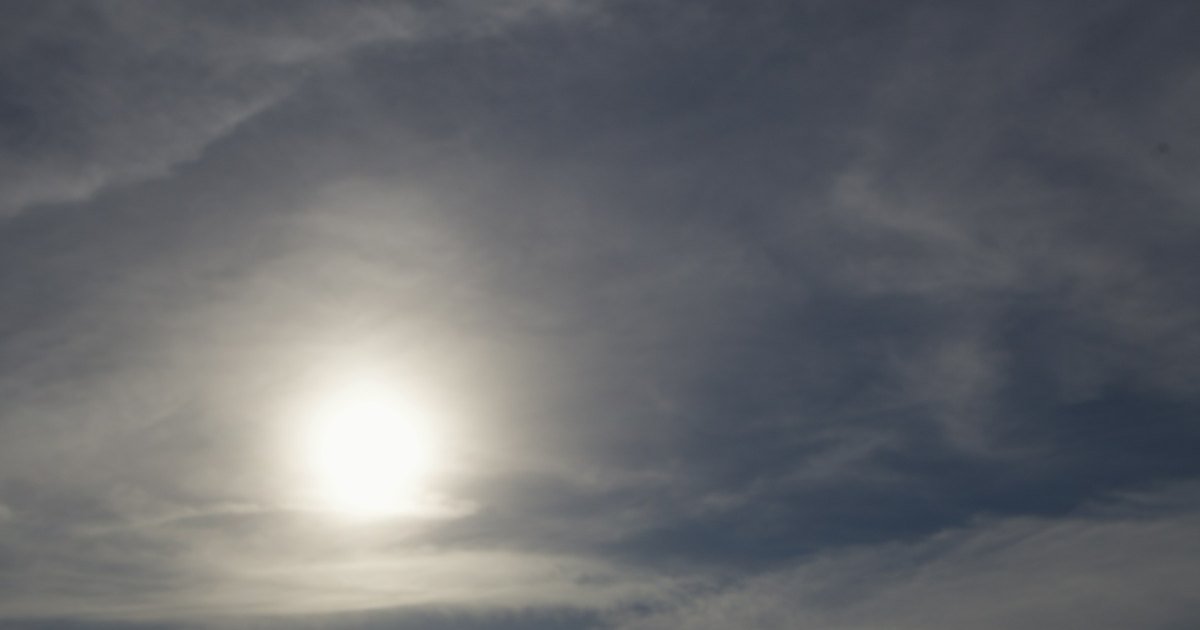
One counter-intuitive detail from the French survey of 1999 is worth noting: 36% of the recorded cases of keratitis occurred in two regions of northern France that were overcast that day. Those patients had most likely not stared at the solar disc; they had scanned a cloudy sky at length. Prolonged ambient ultraviolet exposure, with no glare to interrupt it, is enough to injure the cornea. A hazy sky is not a protective sky.
PROTECTION
How to watch an eclipse while protecting your eyes
The only acceptable device for direct observation is a pair of eclipse glasses compliant with the EN ISO 12312-2 standard, bearing the CE mark, with instructions in the local language and an identifiable manufacturer. These filters let through only a minute fraction of the incident radiation, on a completely different scale from sunglasses, however dark. Points to watch:
- Treat cardboard-framed glasses as single-use. That is the instruction from the Direction générale de la santé: the filter film degrades over time, and an old pair may let infrared and ultraviolet radiation through with no visible sign at all. A pair dating from 1999 is to be discarded, even if it looks intact. With a new pair, hold the filter up to a bright light source before using it: any light coming through, any bright point (a micro-perforation), any scratch, crease or separation of the film means it must be thrown away.
- Never improvise. Sunglasses, smoked glass, X-ray film, optical discs, blackened glass plates, photographic filters: none of these devices protects the retina, and some create a false sense of safety by removing the glare without stopping the harmful radiation.
- No optical instrument, whether binoculars, spotting scope, telescope, camera or smartphone, should be used together with plain eclipse glasses: the instrument concentrates the radiation and can destroy the filter in a fraction of a second. Observation through an instrument requires a dedicated filter placed in front of the objective lens.
- Put the glasses on and take them off while looking away, never towards the Sun.
- Supervise children and teenagers. Young people, teenagers above all, make up a large share of cases after an eclipse. Direct adult supervision is worth more than instructions given from a distance.

Finally, there is a method that avoids looking at the Sun: indirect observation by projection. A piece of card with a small hole in it, held facing the Sun, projects the image of the solar crescent onto a second sheet placed behind it. You turn your back on the Sun and look at the projected image: free, with no need to look at the Sun, and particularly well suited to groups of children.
One last remark, perhaps the most useful of all. In 1999, among the 100 affected patients who watched the eclipse without effective protection, 74 reported having removed their glasses during the observation and 32 had used an unsuitable device; only 4 said they had kept their filter on throughout. The authors concluded that the quality and availability of the glasses had not contributed significantly to the injuries, since more than thirty million compliant pairs had been distributed across the country. The determining factor was not the equipment: it was the act of taking them off, at the most spectacular moment, when the light drops and looking no longer hurts.
In the longer term, protection against ultraviolet radiation is not limited to eclipses: regularly wearing sunglasses that filter UV contributes to preventing early cataract.
FAQ
Frequently asked questions
I looked at the eclipse for a few seconds without glasses, should I be worried?
A brief glance rarely causes injury. But more caution is called for during an eclipse: when the Sun is low and largely hidden, the glare drops and the reflex that makes you look away instinctively for the rest of the year no longer plays its protective role. Monitor your vision over the next 24 to 48 hours, covering each eye in turn. If there is no central patch, no distortion of lines and no drop in acuity, there is no need for a consultation; if there is, book an appointment for an examination with macular OCT.
Can symptoms appear the following day?
Yes, and that is in fact the usual pattern. The retina is devoid of pain fibres, so the exposure triggers no sensation. Problems typically emerge several hours later, often on waking the next morning. The absence of immediate symptoms after watching therefore tells you nothing.
Does solar retinopathy heal completely?
Visual acuity improves in the vast majority of cases, often back to a normal level, over a few weeks to six months. OCT, however, frequently shows a small persistent photoreceptor defect at the centre of the fovea, including in patients who have regained full acuity, and a minority keep a subtle but bothersome central scotoma. Complete restoration therefore cannot be promised.
Is there a treatment for solar retinopathy?
No, no treatment has demonstrated its effectiveness to date. Corticosteroids have been used in several published series, without proof of benefit; their use remains empirical and debated. Management rests on confirming the diagnosis with OCT, documenting the lesion and monitoring how it evolves.
Can the glasses be removed during totality?
Only if you are inside the path of totality, and strictly during the moments when the solar disc is completely covered. From France, the eclipse of 12 August 2026 was partial everywhere, and that of 2 August 2027 will be too: the filter must never be removed. Within the path of totality — on 2 August 2027, the far south of Spain (Cádiz, Málaga), Gibraltar and North Africa — removal is possible during the total phase, but the filter must go back on the instant the Sun reappears. An annular eclipse, such as that of 26 January 2028, is never total: the filter is not removed at any moment.
Can a pair of eclipse glasses from a previous eclipse still be used?
The official message from the Direction générale de la santé dated 22 July 2026, issued for the eclipse of 12 August 2026, is explicit: cardboard-framed glasses are to be treated as single-use. The filter material degrades over time, and a pair dating from 1999 presents a risk even with no apparent damage, since the filter may let infrared and ultraviolet through without anything being visible.
With a new pair, check the filter before use by holding it up to a bright light source: if light comes through, or if bright points appear (micro-perforations), the pair must be thrown away. A damaged frame that lets the film move about leads to the same conclusion. The glasses must also meet the EN ISO 12312-2 standard and carry the CE mark. If in doubt, do not use them.
Do contact lenses or previous refractive surgery change the risk?
No. Corneal refractive surgery such as LASIK, PRK or SMILE does not change how the retina is protected from solar radiation, any more than wearing contact lenses does. The precautions are exactly the same as for everyone else, and a certified filter remains essential.
I could not find compliant glasses, can I still watch?
No. The instruction from the Direction générale de la santé leaves no room for doubt: without compliant protective glasses, the eclipse must not be watched directly. Neither sunglasses, nor smoked glass, nor X-ray film, nor a phone screen is an acceptable alternative.
Pinhole projection remains: a piece of card with a small hole in it projects the image of the Sun onto a second sheet, which you look at with your back turned to the Sun. It is free, immediate, and it does not expose the eyes. Live broadcasts are the other option.
I have had cataract surgery: does my implant protect me?
Not for this kind of exposure. Today’s intraocular lenses almost always include a filter that absorbs ultraviolet, and some add a blue-light filter as well: this partly reproduces the role of the natural crystalline lens that has been removed. But none of these filters is designed for looking directly at the Sun, and the visible light that then reaches the retina remains more than enough to injure it.
An eye that has had cataract surgery, an eye carrying a phakic implant and an eye that has had refractive surgery therefore call for exactly the same precautions as any other: compliant glasses, or indirect viewing. If you have been operated on recently, or if you are coming out of a consultation with pupil dilation, the eye is temporarily even more exposed: it is better not to watch at all.
Scientific sources
- Dixsaut G, Coulombier D, Malfait P, Bodaghi B, Espinoza P. Éclipse totale de Soleil du 11 août 1999: programme de prévention et surveillance des complications oculaires. Bull Acad Natl Med. 2000;184(5):1049-1058. PMID: 11077724
- Dihan QA, Brown AD, Alshammari N, Shakarchi AF, Chauhan MZ, Sallam AB. Eye on the Eclipse: Demographic Trends in Solar Retinopathy From 2012 to 2024. J Vitreoretin Dis. 2026. PMID: 42164909
- Bachmeier I, Helbig H, Greslechner R. Eclipse retinopathy: a case series after the partial solar eclipse on 20 March 2015. Ophthalmologe. 2017;114(1):44-48. PMID: 27283596
- Abdellah MM, Mostafa EM, Anber MA, El Saman IS, Eldawla ME. Solar maculopathy: prognosis over one year follow up. BMC Ophthalmol. 2019;19(1):201. PMID: 31533669
- Wiest MRJ, Gunzinger JM, Hamann T, et al. Natural Course of Solar and Laser-Associated Retinal and Macular Injuries at a Primary Care Hospital in Switzerland. Klin Monbl Augenheilkd. 2023;240(4):516-521. PMID: 37164408
- Stephenson KAJ, Stephenson GR, Forristal MT, Moran S, O’Donoghue E. Long-term anatomical and functional findings of solar maculopathy. Ir J Med Sci. 2024;193(1):435-441. PMID: 37380832
- Poremba M, Nawrock P, Dua S, Klapec S, LaMantia V, Nesbit C. Incidence of Solar Retinopathy and Photokeratitis in US Emergency Departments Surrounding the April 2024 Total Solar Eclipse. West J Emerg Med. 2026;27(1):159-162. PMID: 41554171
- Das AV, Tyagi M, Kadam Y, Belenje A. Solar retinopathy in India: Clinical presentation and demographic distribution in 253 patients (349 eyes). Indian J Ophthalmol. 2023;71(5):2061-2065. PMID: 37203081
- Redelmeier DA, Staples JA. Fatal Traffic Risks With a Total Solar Eclipse in the US. JAMA Intern Med. 2024;184(5):578-580. PMID: 38526467
- Direction générale de la santé. Public health information message no. 2026_08 — Prevention of eye injuries at the time of the solar eclipse of 12 August 2026. 22 July 2026.
- CNES. Solar eclipse of 12 August 2026: an event visible from France. Track of the path of totality.
- Observatoire de Paris — IMCCE. Local circumstances of the eclipse of 12 August 2026 (ÉclipSEOP application) and sunrise and sunset ephemerides.
- Observatoire de Paris — IMCCE. Total solar eclipse of 2 August 2027: general circumstances and visibility from France.
Further reading
- Sunglasses and UV: protecting your eyes from early cataract
- Sun and holidays after cataract surgery
- Dr Moïse Tourabaly — Ophthalmologist
Cachan practice · Tel. +33 1 45 47 08 11
Paris 13 practice · Tel. +33 1 89 31 30 60
Medical disclaimer
This article is for information only. A personalised ophthalmological opinion remains essential for any treatment decision.
This article is intended as general information and does not replace a medical consultation. The diagnosis of solar retinopathy rests on a full eye examination including macular OCT, the reference investigation for distinguishing this condition from the other causes of reduced central vision. Any recent onset of a central patch, distortion of straight lines or drop in acuity warrants an ophthalmological opinion, whether or not it follows exposure to the Sun.
Written and reviewed by Dr Moïse Tourabaly, ophthalmic refractive surgeon — former chef de clinique (Quinze-Vingts National Eye Hospital).
Last updated: October 3, 2026