
Cross-linking for keratoconus (CXL): who it helps and how it works
Cross-linking for keratoconus (CXL): who it helps and how it works Corneal cross-linking, or CXL, is a treatment…

Cross-linking for keratoconus (CXL): who it helps and how it works Corneal cross-linking, or CXL, is a treatment…

What is keratoconus? Definition, causes and progression Keratoconus is a progressive deformation of the cornea, which gradually thins…

Key points Diplopia is the medical term for double vision: one and the same object is perceived as…
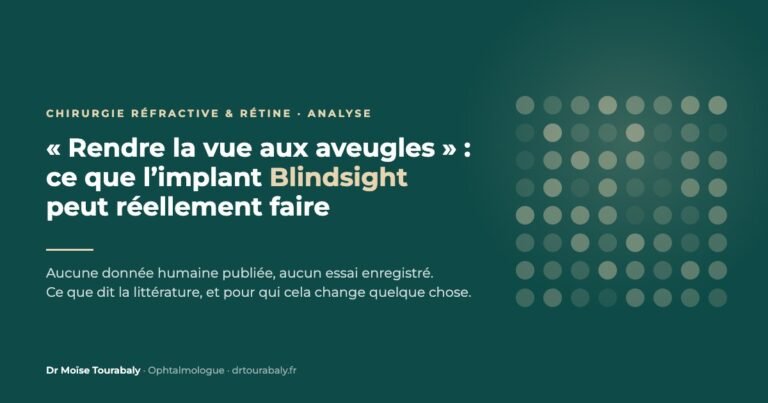
“Restoring sight to the blind”: what Neuralink’s Blindsight implant can actually do Elon Musk announced in March 2025…

Mydriasis and miosis: why a pupil dilates or constricts Mydriasis refers to an abnormally dilated pupil, miosis to…

On 23 July 2026, France’s medicines agency listed eleven eye drops under supply pressure, led by fluorescein and Mydriaticum. Dr Tourabaly explains what these drops are used for, why single-dose vials run short first, and what to do as a patient.

Key points Keratitis is inflammation of the cornea, the transparent membrane at the front of the eye, in…

Blue-light glasses: are they really worth it? Blue-light-filtering lenses are marketed as protection against screen-related eye strain, retinal…

Those threads and specks drifting across your field of vision are most often harmless. When they may signal a retinal emergency and when to seek care without delay.
End of content
End of content