Sleeping in Contact Lenses: What Are the Dangers for Your Eyes?
Sleeping in your contact lenses multiplies the risk of a corneal infection by 6.5, the main serious complication of lens wear. During sleep, the closed eye and the lens deprive the cornea of part of its oxygen, weaken its surface and open the door to micro-organisms. This habit, often seen as harmless, is one of the leading risk behaviours identified among lens wearers. Understanding why it is discouraged, knowing how to recognise the warning signs and adopting the right reflexes helps protect your eyes over the long term while still wearing lenses.
KEY POINTS
Sources: Stapleton 2012; Cope 2016; Cope 2015 (see references at the bottom of the page).
What happens when you sleep in your contact lenses?
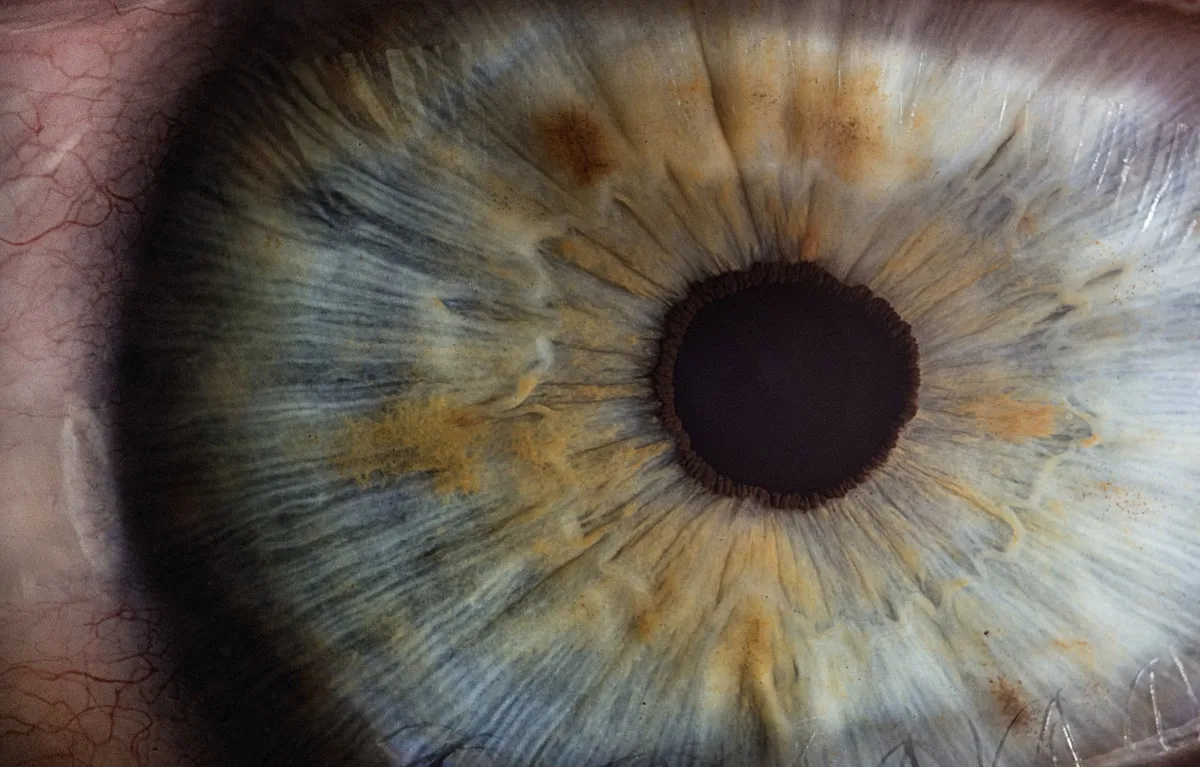
Sleeping in your lenses places the cornea in unfavourable conditions for several hours. The cornea, the transparent window at the front of the eye, has no blood vessels: it draws much of its oxygen directly from the air. A contact lens already reduces this supply during the day. At night, when the eye closes, oxygenation drops further, and adding a lens deepens the deprivation Stapleton 2012.
This drop in oxygenation, known as hypoxia, weakens the layer of cells covering the cornea. Yet this layer acts as a barrier: intact, it protects the eye from micro-organisms; damaged, it lets bacteria, fungi or parasites settle in more easily. The warm, moist environment between the lens and the eye, kept closed all night, also encourages their growth.
On top of this, tears circulate less when the eye is closed. The tear film, which cleans and protects the surface continuously, renews less well at night beneath a lens. Debris and micro-organisms are therefore removed less effectively. It is the combination of these mechanisms, hypoxia, a weakened surface and slowed tears, that makes sleeping in lenses one of the leading behaviours exposing you to infection Carnt 2017.
RISKS
What are the real dangers?
The main danger is microbial keratitis, an infection of the cornea that can leave a scar and lastingly impair vision. Wearing lenses during sleep is among the factors that most clearly increase this risk. A large case-control study showed that occasional overnight wear, even less than one night a week, multiplies the risk of moderate to severe keratitis by 6.5 compared with daily removal Stapleton 2012.
This risk is far from theoretical. By analysing lens-related infections reported to US health authorities, researchers found that nearly one infection in five (19.8%) came with a corneal scar, reduced vision, or required a corneal transplant. A quarter of these infections (25.1%) were linked to avoidable factors such as overnight wear or poor hygiene Cope 2016.
The authorities have in fact documented cases of severe corneal infections directly linked to sleeping in lenses, including in young, healthy people. Some required heavy, prolonged treatment, sometimes a corneal transplant, with permanent after-effects. These observations concern ordinary wearers, in everyday situations such as a nap or a night when lenses were forgotten Cope 2018.
The germs involved are varied. Contact with water, often associated with lens wear, adds a particular risk of infection by a parasite responsible for a form that is difficult to treat. This is why sleeping in lenses and exposure to water are two behaviours that specialists recommend avoiding, as detailed in our article on acanthamoeba keratitis.

WARNING SIGNS
The signs that should alert you
After a night spent in your lenses, certain signs call for removing the lenses and seeking prompt medical advice. A developing corneal infection may show up as redness that sets in, pain that increases, a persistent foreign-body sensation or marked discomfort in light. Watering eyes, discharge or vision that becomes blurred are also signals not to be overlooked.

Remove your lenses and seek advice without delay in case of:
- a red eye that does not improve after removing the lens;
- eye pain, a foreign-body sensation or intense discomfort in light;
- reduced vision, blurred vision or heavy watering;
- discharge or a whitish spot visible on the cornea.
Faced with these signs, you should not put a lens back in or wait for it to pass. A corneal infection treated early generally has a more favourable outcome than a neglected one. If in doubt, contact your ophthalmologist or go to an eye emergency department. Always mention that you wear contact lenses: this information guides the examination and management from the outset Carnt 2017.
EXTENDED WEAR
Can you sleep in certain lenses?
Some lenses are designed for extended wear, but none eliminates the risk linked to sleep. These lenses let more oxygen through than conventional models and are approved by manufacturers to be kept in for several days. Studies show, however, that overnight wear, even with these lenses, remains associated with a higher infection risk than daily removal. Their use must therefore be supervised by a professional.
Another special case is orthokeratology, which uses rigid lenses worn at night to temporarily reshape the cornea, notably to slow the progression of myopia in children. These lenses are specifically intended for overnight use, within a precise medical framework, with regular follow-up and strict hygiene rules. They have nothing to do with keeping conventional soft lenses in during sleep out of convenience.
The general rule stays simple: unless there is a specific prescription and appropriate follow-up, lenses are removed before sleeping. If you are tempted by extended wear for practical reasons, discuss it with your ophthalmologist, who will assess whether it is feasible in your case and explain the essential precautions. No lens removes the need to monitor the health of your eyes Cope 2016.
WHAT TO DO
What to do if you fell asleep in your lenses?
On waking, never remove a lens by force if the eye is dry. Falling asleep once in your lenses happens to many wearers and thankfully does not always cause a complication. The lens may, however, stick slightly to the surface. Here are the right steps to take, in order:
- moisten the eye with lubricating drops suitable for lenses;
- blink several times so the lens rehydrates and moves freely;
- remove it gently, without forcing, once it moves;
- let the eye rest without a lens for a few hours, wearing your glasses.
Once the lens is out, watch for the warning signs mentioned above: passing discomfort that fades is reassuring, but redness, pain or reduced vision that sets in calls for a consultation. Recall that nearly a third of wearers report having already had a red or painful eye that required a consultation: this kind of episode is not rare and deserves to be taken seriously Cope 2015.
If the episode recurs, it is best to draw conclusions from it. An occasional lapse may prompt you to rethink your routine, for example by choosing daily disposable lenses that you systematically throw away in the evening, or by setting up a removal ritual before bed. Discussing it with your ophthalmologist helps adapt the type of lenses and the wearing pattern to your lifestyle, under optimal safety conditions.
PREVENTION
How to wear your lenses safely?
Prevention rests on a few simple but decisive habits. Removing your lenses before sleeping, including for a short nap, is the measure that most reduces the risk of infection. The essential steps come down to a few points:
- remove your lenses before sleeping, naps included;
- wash and dry your hands before any handling;
- respect the prescribed wearing and replacement schedule;
- use a suitable care solution, never tap water;
- avoid any contact between the lenses and water (shower, pool, sea).
Care matters just as much. You should replace the solution in the case at each use rather than topping it up, rinse the case with solution, air-dry it and replace it regularly. Our detailed advice is set out in the article on common hygiene mistakes.
Finally, regular ophthalmological follow-up makes it possible to check that the lenses are well tolerated and to detect any warning signs before they become problematic. Wearing lenses remains a comfortable solution suited to many lifestyles, provided these rules are respected. If you have any doubt about a practice or a symptom, a professional’s opinion always takes precedence over habits built up over time Cope 2016.
FREQUENTLY ASKED QUESTIONS
Frequently asked questions
Is it serious to fall asleep once in your lenses?
An occasional lapse does not always cause a complication, but it raises the risk of a corneal infection: overnight wear, even less than one night a week, multiplies this risk by 6.5 according to studies. On waking, moisten the eye with suitable drops, gently remove the lens and let the eye rest without a lens for a few hours. Redness, pain or reduced vision that sets in calls for seeking advice without delay.
Can you take a nap in your lenses?
Even a short nap in lenses exposes the cornea to a drop in oxygenation. It is therefore preferable to remove your lenses before sleeping, including for a short while. If you know you are likely to doze off, it is better to take them out in advance. Regular naps in lenses are among the habits to avoid in order to limit the risk of infection.
Are extended-wear lenses safe at night?
These lenses let more oxygen through and are approved for continuous wear by manufacturers, but overnight wear remains associated with a higher infection risk than daily removal. Their use must be prescribed and monitored by a professional. They do not remove the need for hygiene rules or for monitoring the health of your eyes. If you feel discomfort, take them out and seek advice.
How much does the infection risk increase from sleeping in them?
A large case-control study estimated that occasional overnight wear of lenses, even less than one night a week, multiplies the risk of moderate to severe microbial keratitis by 6.5 compared with daily removal. The exact level depends on the type of lenses, the frequency and other hygiene habits. The key point to remember is that this risk is real and avoidable, which is why lenses should be removed before sleeping.
What signs should alert me after a night in my lenses?
A red eye that persists, pain, a foreign-body sensation, discomfort in light, watering, discharge or reduced vision should lead you to remove the lens and seek advice promptly. A whitish spot on the cornea is particularly concerning. Always tell the doctor you wear lenses, as this guides the examination and management.
Is orthokeratology, these overnight lenses, dangerous?
Orthokeratology uses rigid lenses worn at night within a precise medical framework, notably to slow myopia in children, with regular follow-up and strict hygiene rules. Prescribed and monitored, it is a supervised approach, very different from keeping conventional soft lenses in during sleep out of convenience. Following the care instructions is essential.
What should I do if my lens is stuck on waking?
Never pull on a dry, stuck lens. Instil lubricating drops suitable for lenses, blink several times and wait for the lens to rehydrate and move freely before removing it gently. If it stays stuck or the eye becomes painful or red, do not force it and ask your ophthalmologist or an eye emergency department for advice.
Scientific sources
- Cope JR, Konne NM, Jacobs DS, et al. Corneal Infections Associated with Sleeping in Contact Lenses – Six Cases, United States, 2016-2018. MMWR Morb Mortal Wkly Rep. 2018;67(32):877-881. PMID 30114003
- Stapleton F, Edwards K, Keay L, et al. Risk factors for moderate and severe microbial keratitis in daily wear contact lens users. Ophthalmology. 2012;119(8):1516-1521. PMID 22521083
- Carnt N, Samarawickrama C, White A, Stapleton F. The diagnosis and management of contact lens-related microbial keratitis. Clin Exp Optom. 2017;100(5):482-493. PMID 28815736
- Cope JR, Collier SA, Srinivasan K, et al. Contact Lens-Related Corneal Infections – United States, 2005-2015. MMWR Morb Mortal Wkly Rep. 2016;65(32):817-820. PMID 27538244
Further reading
- Acanthamoeba keratitis: the danger of water with contact lenses
- Contact lens hygiene: the most common mistakes
- When to seek emergency care in ophthalmology?
Cachan practice · Tel. +33 1 45 47 08 11
Paris 13 practice · Tel. +33 1 89 31 30 60
Medical disclaimer
This article is intended for general information and does not replace a medical consultation. Wearing contact lenses should be the subject of a prescription and follow-up by a healthcare professional. In case of a red or painful eye, reduced vision or persistent discomfort after wearing lenses, remove your lenses and promptly consult an ophthalmologist or an eye emergency department.
Written and reviewed by Dr Moïse Tourabaly, ophthalmic refractive surgeon — former chef de clinique (Quinze-Vingts National Eye Hospital).
Last updated: September 19, 2026